|
Dear NKS member organisations, dear friends!
The year is still young, but one date is already set: in July, our Working Group will gather in Fryslân/Friesland (Netherlands) for the 10th NKS Annual Meeting! We are looking forward to the exchange on site in Ljouwert/Leeuwarden and to seeing many of you again among the West Frisians!
Beyond that, there is already quite a lot to report from our network. New developments and initiatives show how diverse the topics are that currently concern minorities without a kin-state.
This newsletter provides a brief overview and at the same time looks ahead to the coming months.
Enjoy reading!
|
|
|
SAVE THE DATE: NKS Annual Meeting 2026 in Fryslân/Friesland
It is now confirmed: from 2 to 5 July 2026, our Working Group will hold its 10th Annual Meeting, this time in Ljouwert/Leeuwarden in the province of Fryslân/Friesland (Netherlands). The conference will be hosted by the FUEN member organisation De Fryske Beweging, which is committed to promoting the West Frisian language and culture.
This year’s meeting will focus on the topic “Digital visibility of minority languages”. Discussions will address how languages can become more present in the digital space, for example through digital resources, media, or educational initiatives.
Please save the date, invitations will follow shortly!
You can learn more about the host organisation De Fryske Beweging here. |
|
|
|
|
|
Frisian on traffic signs: bilingual signage decided
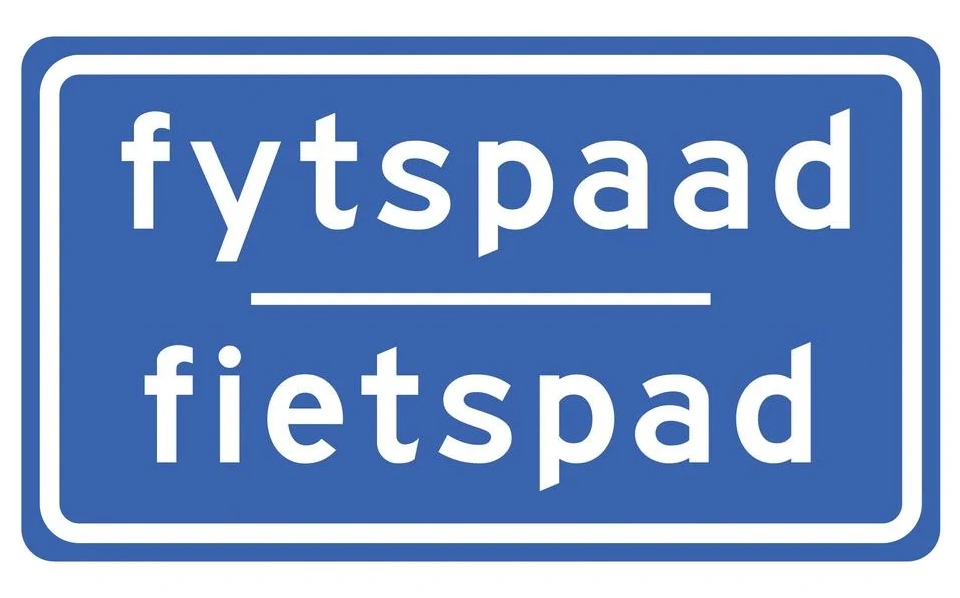
In view of the upcoming NKS Annual Meeting, it is also worth taking a look at current developments on site: in the province of Fryslân/Friesland, traffic signs are to become bilingual. In addition to Dutch, Frisian will also become visible in public space.
However, the concrete design sparked debate: Frisian will appear below Dutch on the signs. The FUEN member organisation De Fryske Beweging had advocated for the opposite order (as shown in the image on the left).
Despite this decision, it remains an important step: Frisian will become significantly more visible in everyday life in the province of Fryslân/Friesland.
Read more here (in Frisian). |
|
|
|
|
|
Olympic Winter Games 2026: Ladin largely absent from the official framework
The 2026 Winter Olympics in Milan and Cortina d’Ampezzo have come to an end. Several competitions took place in the Ladin settlement area, yet the Ladin language and culture remained largely absent from the official presentation of the Games.
FUEN had already addressed the International Olympic Committee (IOC) in advance, raising concerns about the lack of visibility and proposing concrete measures. The IOC’s response referred to responsibilities and legal frameworks, without outlining any concrete steps.
Read more on FUEN’s LinkedIn page. |
|
|
|
|
|
|
|
|
Aromanian spring festival in Romania
The Aromanian community in Romania is once again organising its music and dance festival “Spring of the Aromanians”. A first event already took place on 15 March in Bucharest, and another event will follow on 5 April in Constanța.
The festival brings together numerous artists and dance groups and provides insights into the musical and cultural traditions of the Aromanian community.
The event is organised by the youth department of the Aromanian community (CTArm) and is being held for the 18th (Bucharest) and 19th (Constanța) time.
Read more about the event on 5 April in Constanța here. |
|
|
|
|
|
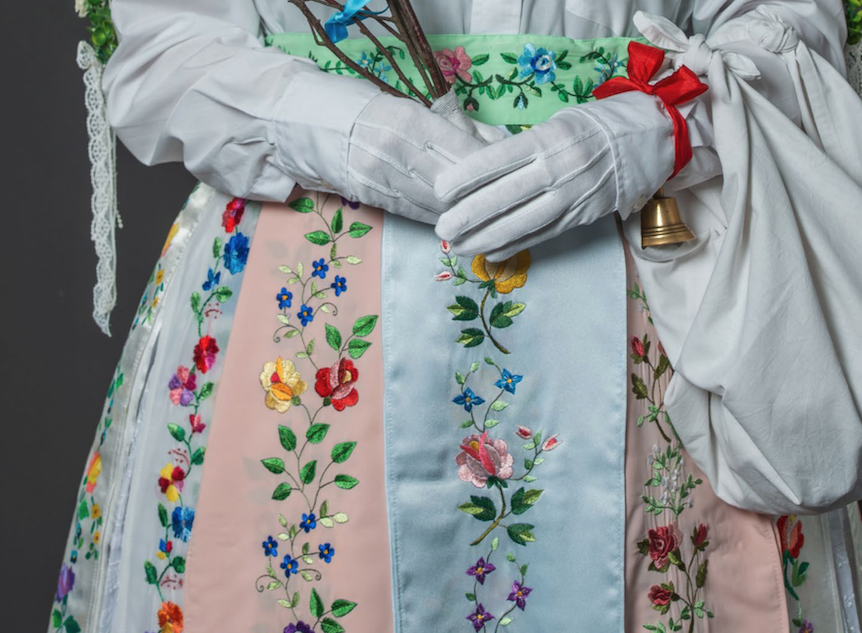
Travelling exhibition on Sorbian traditional costume regions
The Sorbian Cultural Tourism Association developed an exhibition on Sorbian traditional costume regions last year. It comprises 22 large-format image panels and is currently being shown in Lusatia. A brochure with background information on the costume regions has also been produced.
The exhibition can also be borrowed by other organisations and offers opportunities for cooperation within the NKS network.
You can view the brochure on the exhibition here. |
|
|
|
|
|
Cultural impulses from Friesland: theatre production “Kanoet”
With the performance “Kanoet” (Birds), the Frisian theatre maker Theo Smedes shows how content in minority languages can be brought to the stage. The performance is part of the international theatre festival MITEM (Madách International Theatre Meeting), which takes place in April and May in Budapest and brings together productions in minority languages, such as Frisian, Catalan or Tatar.
The play “Kanoet” will be performed on 29 April in Frisian with Hungarian and English subtitles. At its centre are the world of wading birds, their connections across regions and the interaction of different ecosystems – as well as the question of how to find one’s own path.
Read more here. |
|
|