Ladin language at the 2026 Winter Olympic Games still not officially recognised
Shortly before the start of the 2026 Winter Olympic Games in Milan and Cortina d’Ampezzo (Italy), the Ladin language continues to lack official recognition. Although Cortina d’Ampezzo lies in the heart of the Ladin settlement area, the presence of this autochthonous minority is so far not reflected in the official communication of the Games.

In response, the NKS member organisation Union Generela di Ladins dles Dolomites has launched an information and action campaign. The aim is to raise awareness among the media, athletes and the international public of the Ladin language, culture and everyday reality.

The population of Cortina d’Ampezzo has been called upon to hoist Ladin flags on public and private buildings during the Olympic Games. According to the Union Generela di Ladins, this appeal has been taken up by a large number of local residents.
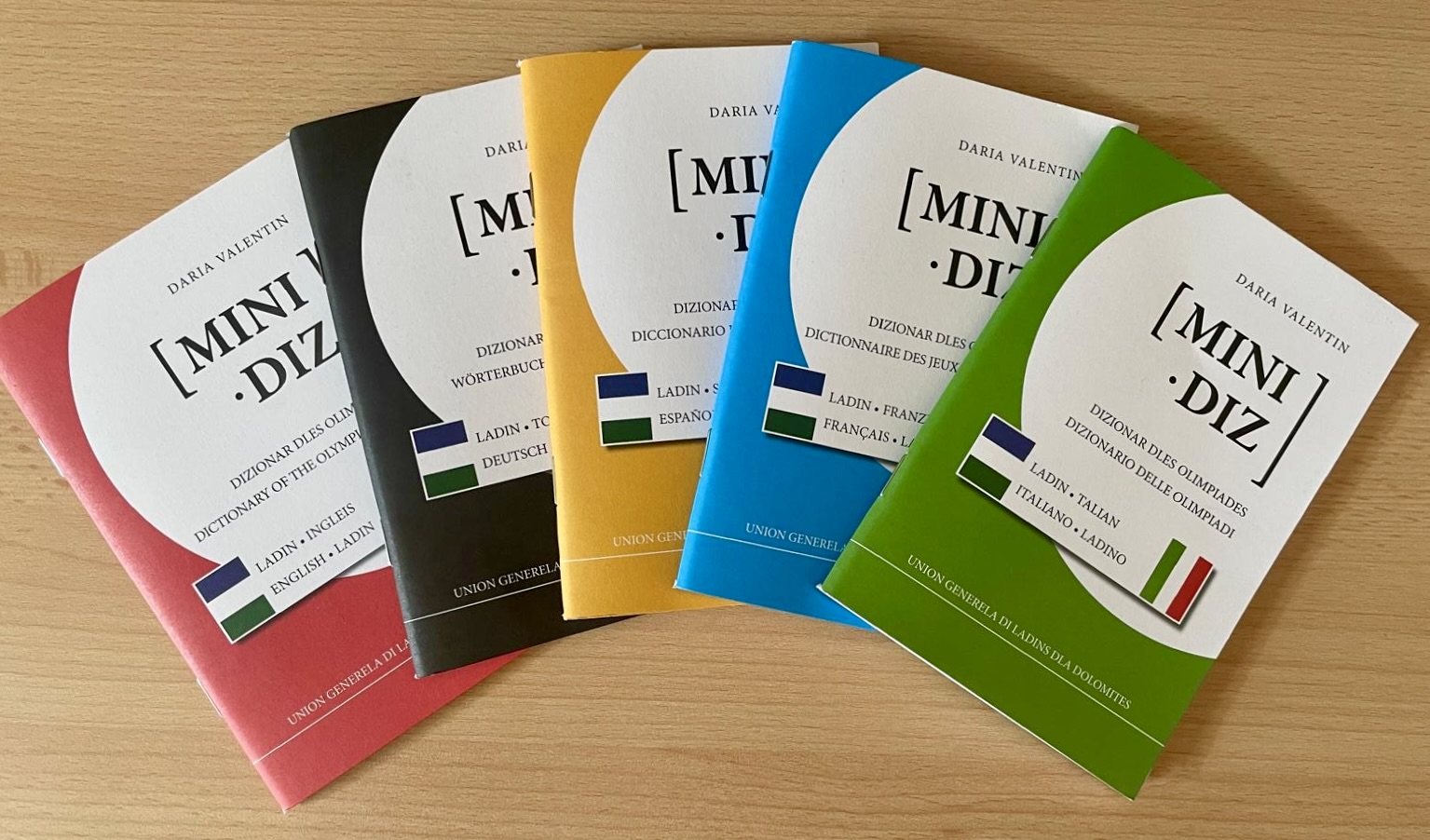
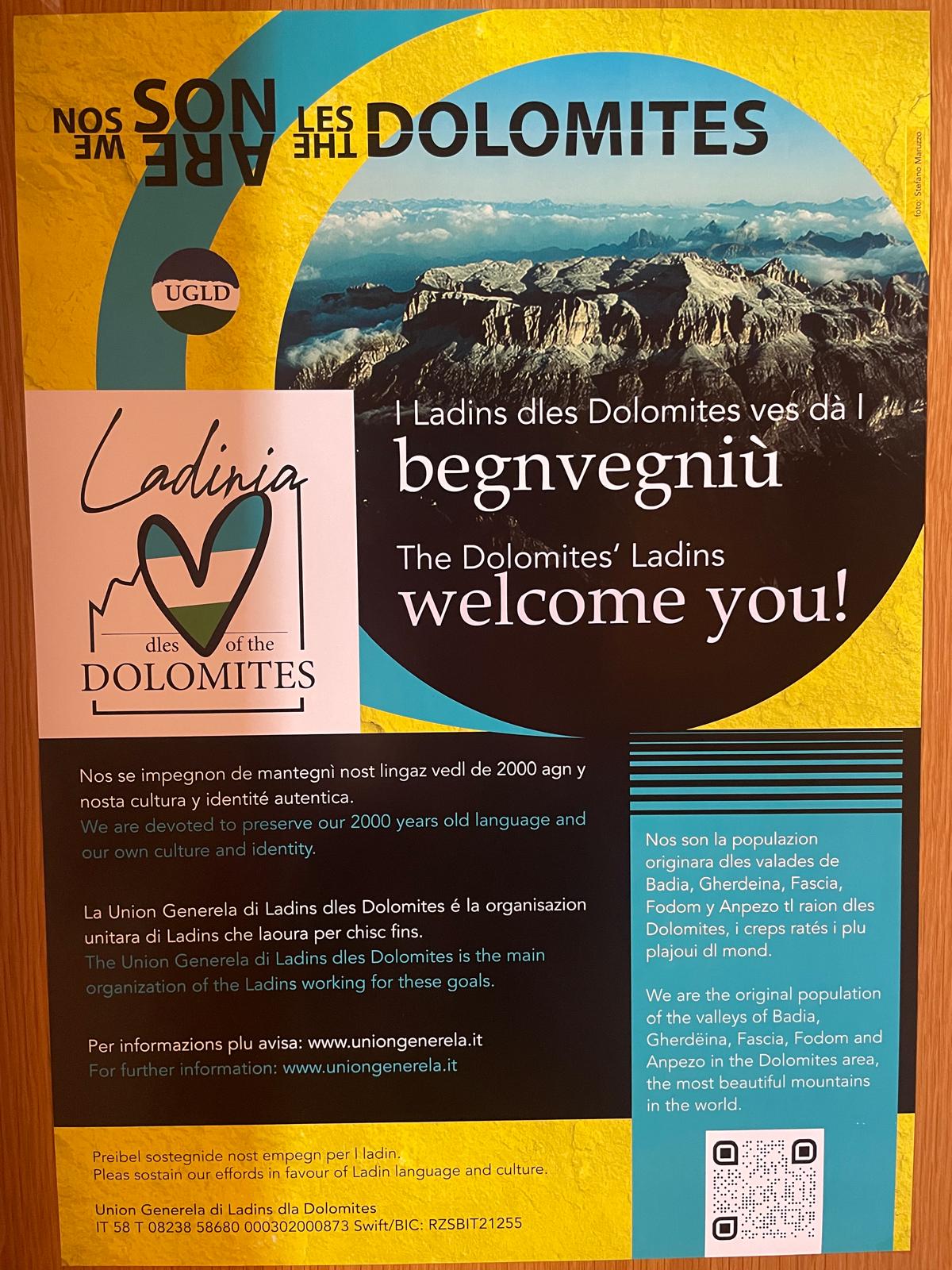
In addition, multilingual Ladin mini-dictionaries with sports-related terminology have been produced. They include translations into German, Italian, English, French and Spanish and are being distributed to journalists and team delegations. Furthermore, posters in Ladin and English are being displayed at competition venues, serving both as a welcome message and as a reference to the Ladin reality.
Via a QR code on the posters, the short film “Ladinia” can be accessed, providing information on the history, language, settlement area and current challenges of the Ladin people of the Dolomites.
The NKS Working Group within FUEN had already previously called for the Ladin language to be visibly taken into account at the 2026 Winter Olympic Games. The visibility of minority languages at major events was also a key focus of the NKS Annual Meeting at the end of May 2025 in South Tyrol. Current developments show that this concern has still not been implemented.
From the perspective of the NKS, recognition of autochthonous minorities must not depend on the engagement of the minorities themselves. International major events bear responsibility for how linguistic and cultural diversity in the host regions is treated. Visibility in public space is part of that responsibility.